Highest portuguese mountain 

Reaching almost 2000 meters above sea level, Estrela Mountain Natural Park represents the highest elevation of continental Portugal. An imposing and spectacular rocky landscape, it is deeply marked with the scars left by the glaciers of erstwhile. Furthermore, it features mountain-specific habitats and numerous endemic species of plants and animals, some of which do not exist anywhere else in the world.

Estrela Mountain Natural Park is the area of excellence for all nature lovers.

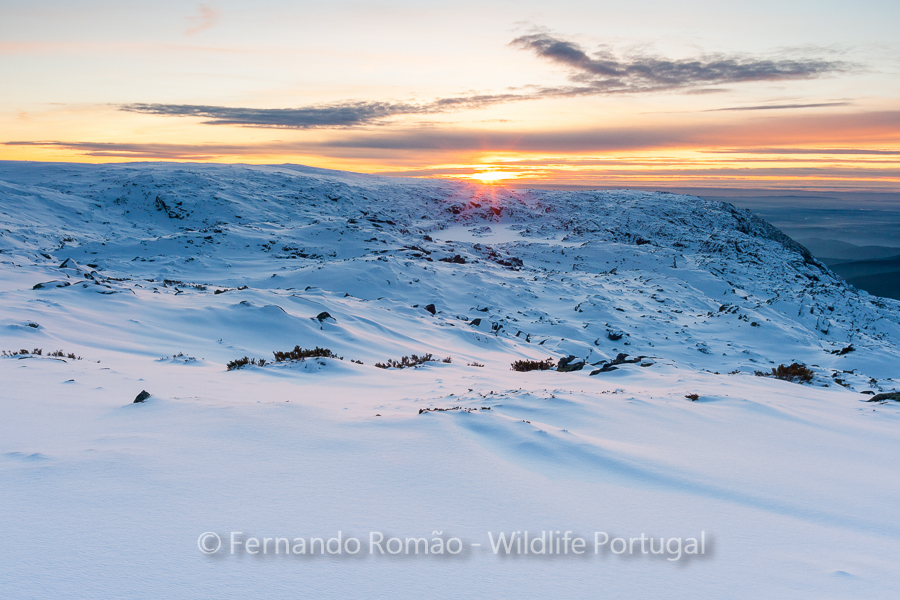
Sunset at Estrela Mountain
Waterfall at Estrela Mountain
Mixed forest at Estrela Mountain

Wildlife values

This Mountain has important natural values. Because of its altitude, the geographic isolation allowed certain species of animals and plants to find refuge or to evolved here separately from other populations, thus creating distinct and specific species for this territory.

In the higher altitudes, you can find and watch with ease, the ex-libris of the Estrela reptiles, the Iberian Rock Lizard (Iberolacerta monticola), an endemism of this Mountain.

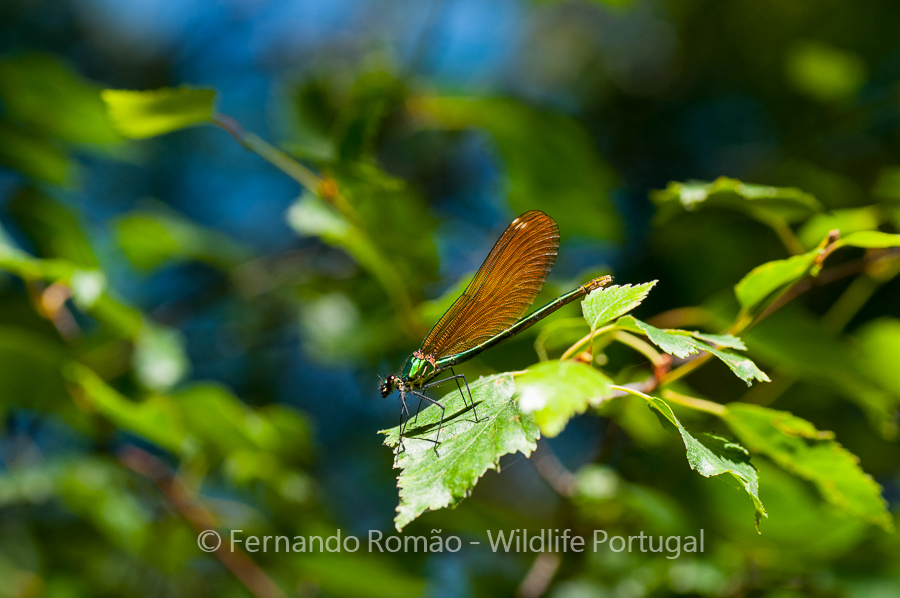
It is also possible to see some insects that are exclusive from here. The Monotropus lusitanica, the Iberodorcadion brannani the Zabrus estrellanus and the Ctenodecticus lusitanicus are the main ones. Other species found in Estrela Mountain its exclusive distribution area in Portugal. Such is the case of the dragonflies Moorland Hawker (Aeshna juncea) and Yellow-winged Darter (Sympetrum flaveolum) and the Black Satyr (Satyrus actaea) butterfly.

From the group of existing birds and that we can observe at Estrela Mountain Natural Park, some of them find in this mountain its preferred habitat at national level. From a list of about 100 species of residents birds, we can highlight the following:

Rock Thrush (Monticola saxatilis), Ortolan Bunting (Emberiza hortulana), Rock Bunting (Emberiza cia), Montagu’s Harrier (Circus pygargus), Peregrine Falcon (Falco peregrinus), Northern Wheatear (Oenanthe oenanthe), Tawny Pipit (Anthus campestris), Short-Toed Snake Eagle (Circaetus gallicus), Booted Eagle (Hieraeetus pennatus), Crag Martin (Ptyonoprogne rupestris), Dipper (Cinclus cinclus), Common Redstart (Phoenicuros phoenicuros), Chough (Pyrrhocorax pyrrhocorax).


Botanic values

In terms of flora, there is a wide variety of plants and flowers that lend their color to the paths and slopes of the mountain. Like the animals, some elements of the botany only survive in this mountainous territory. The highest ground of Estrela presents pseudo-alpine features and therefore the vegetation is mostly formed by small-sized plants, shrubs and creeping plants like the Juniper (Juniperus alpina) and grasses such as Festuca henriquesii and Cervum (Nardus stricta), plants adapted to the adverse weather of winter with a regular coverage of snow.

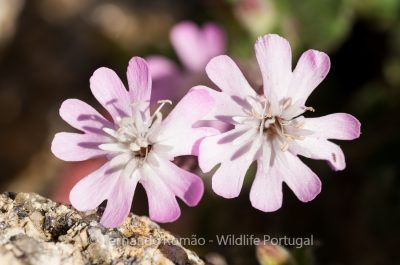
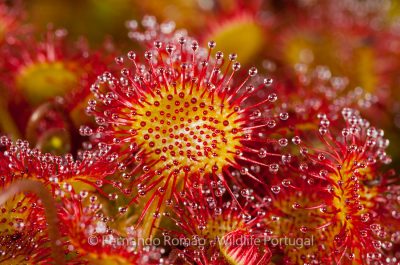
The Campanulla herminii, a beautiful blue flower that is associated with altitude pastures (cervunais) and the Silene foetida subsp. foetida, bloom during the summer months. But since the middle of winter and early spring we can see several species of daffodils (some are Iberian endemisms) and the Fritillary (Fritilaria nervosa). In wetter areas, we can still find the tiny Sundew (Drosera rotundifolia) a carnivorous plant.

Iberian Rock Lizard
Iberian Rock Lizard
Botanic tour
Silene foetida foetida
Botanic tour
Common Sundew (Drosera rotundifolia)

Geomorphological values

Estrela Mountain was formed/rose due to the Hercynian orogeny (300 million years ago) and later with the convergence of the Eurasian and African plates (70-90 million years ago). Afterwards, during the Tertiary period (65-2.5 million years ago) it continue to rise with the Alpine orogeny.

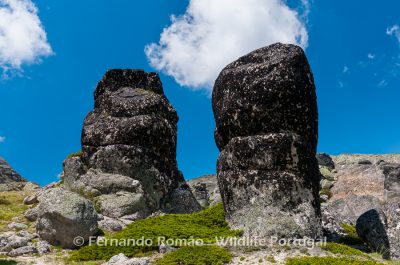
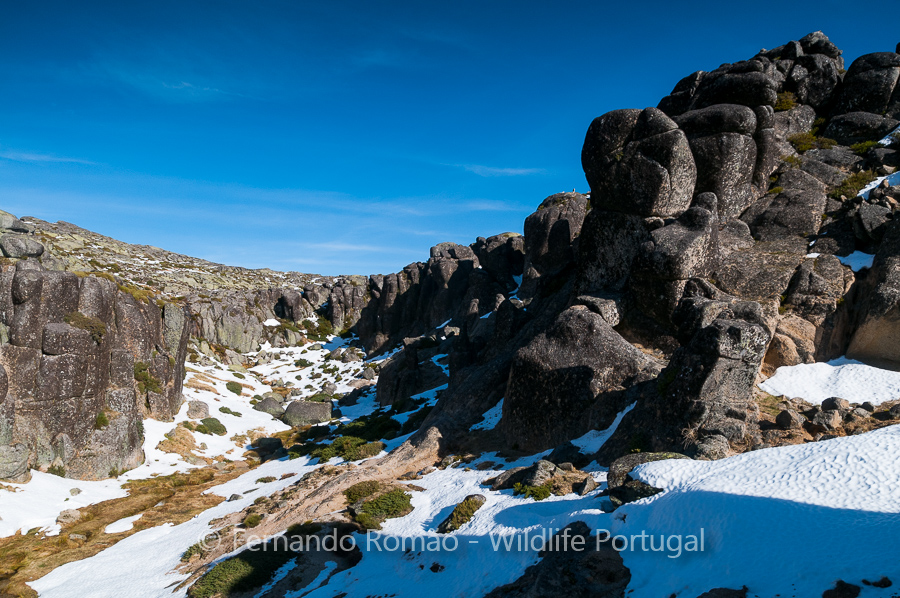
Glacial processes during the Quaternary period (last 2.5 Ma) contributed to the current morphology of the upper levels of the mountain range. The Upper Plateau was covered by a polar ice cap measuring approximately 66 m² and reaching an average thickness of 80 meters. Seven glacial tongues diverged from this ice cap.

The last cold period (Wurm glaciation) began approximately 100,000 years ago and ended only 10,000 years ago. It was mainly the processes associated with glaciation that left deep marks on the relief and landscape of Estrela Mountain, making it the best place in the country to see this. Its geomorphological richness has also earned this territory the classification of Geopark Estrela by UNESCO.

Estrela Mountain Natural Park
Zêzere Glacier Valley - Estrela Mountain

Estrela Mountain Photo Tour

In general, our photo tours cover the different aspects of the natural heritage of Estrela Mountain. However, we can direct the tours for a more specific approach.

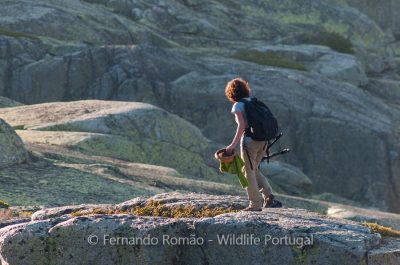
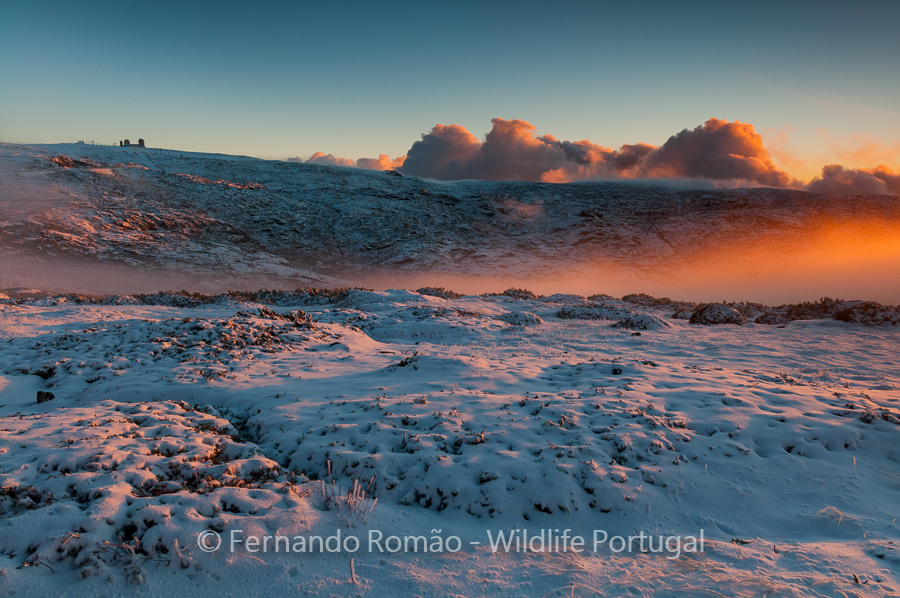
Through our selected itineraries, the Estrela Mountain Photo Tour is ment to allow participants to meet and photograph the most relevant aspects of the natural heritage of Estrela Mountain, whether the rock formations and the remains of glaciations, birds, reptiles and amphibians, insects, flowers, mountain scenery, water and, even in winter, landscapes with snow and ice.

Accompanied by a guide and experienced nature photographer, we can still, in a practical way, develop some techniques and photographic concepts.

Estrela Mountain Photo Tour

THE BEST OF EACH SEASON:

Winter (December to March) winter landscapes with snow and ice, daffodils and fritillary flowers.

Spring (April to June) – spring landscapes, fauna and flora, water.

Summer (July to September) – fauna (reptiles, amphibians, insects) and the most important flowers.

Autumn (November) – autumnal landscapes, deciduous and mixed forests, mushrooms, water.


Photo gallery


Meeting point: Manteigas

Duration: 4 to 6 hours

Type: on vehicle, but with several stops for short walks

RECOMMENDATIONS AND TIPS

For this program comfortable shoes are needed (preferably hiking boots), pants, windbreaker and other garment adapted to the season and weather forecasts. Bring water. About the photographic equipment, although indicative, the ideal will be a reflex digital camera (DSLR), wide angle lens, another lens with longer focal (eg 70-200mm), tripod. Participants may bring other equipment (eg, macro lens, flash, filters, etc.).

Even during the summer, the weather can deteriorate very sunddenly and become somewhat harsh: strong winds, low temperatures, fogs. Depending on the weather conditions for the day of the activity, there may be, or not, a change or cancellation of the program.


HALF DAY

Up to 4 participants: 160,00 € (group price)


FULL DAY

Up to 4 participants: 215,00 € (group price)


For larger groups, other conditions apply. Please contact us.

The price quoted includes a guide, transport from Guarda or local centre (if applicable), insurance.

Place reservations are only guaranteed after payment of 50 per cent of the registration fee.

Discount offer equal to VAT for private customers.
VAT is added to the prices indicated for companies and other organisations.


Through the contacts available, indicating your name and cell phone contact/email.

The reservation is only guaranteed upon payment of 50% of the registration fee.

contact form

Email: info@wildlifeportugal.pt

Mobile/WhatsApp: +351 918 068 872

(call to the national mobile network)

Nature First Bronze Partner
RTT certification